Interconnected devices: the future of Auto ID
The pace of innovation in Auto ID continues to accelerate. Let Edward Lee of the Business Development Team at Argox be your guide to the most important advances – in this blog we share some of his insights into the future of this rapidly developing technology.
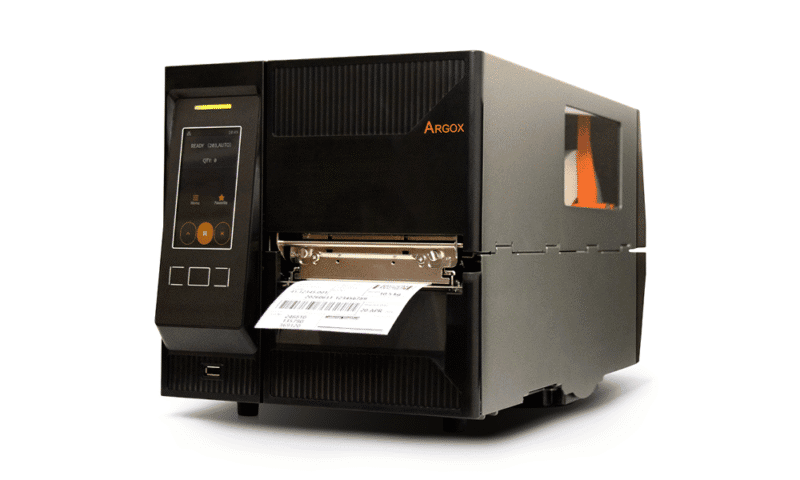
A key transformation has been the introduction of device connectivity, whether linking devices to each other, or to data management systems. Rather than merely capturing data, the latest Argox devices are capable of transmitting, receiving and processing information. This in turn enables warehouse and process automation, thereby freeing up human operatives to focus on tasks that add greater value.
Supply chain automation has proven to be a breakthrough technology in that it is facilitating the rapid expansion of ecommerce, and also introducing efficiencies in industries where time savings can lead directly to improved outcomes, just as food processing and transportation.
Africa embraces Auto ID innovation
The exponential growth in ecommerce has seen a shift in consumer expectations, while Africa’s deepening integration into global supply chains has also necessitated increased efficiencies and enhanced capabilities.
The adoption of connected Auto ID technologies has not been without its challenges – many of them posed by climatic and infrastructure realities – but the latest Auto ID innovations are permitting elevated efficiency and providing inventory and logistics managers with the data-driven insights needed to achieve improved customer service, food safety, and inventory management, for example.
These changes mirror the global picture, with Auto ID devices instantly transmitting data to cloud-based applications. This has allowed for the introduction of dashboard-based monitoring systems, and the ability of manufacturers, growers, suppliers and customers to monitor shipments and deliveries in real time.
AI: a new game-changer
The availability of large volumes of data means that artificial intelligence can now be brought into play. AI can detect trends and anomalies in datasets far faster than humans can, which in turn enables processes to be refined and operations pivoted in ways that save costs, reduce delays and provide decision-makers with the information they need to deliver enhanced results.
Retail leads the way
Edward pointed out that the retail sector is at the forefront of Auto ID innovation, due to several unique features of this industry. These include the challenges of inventory management in scenarios with high turnover and potentially thousands of SKUs, customer demand for increased convenience and speed, and the need to prevent both theft and counterfeiting.
Customer expectations are a particularly important consideration in ecommerce, with the accuracy and punctuality of last-mile delivery services forming a key part of how customers perceive (and rate) their overall experience.
The complexity of ecommerce is only likely to increase as its popularity continues to grow, and consumers in rural areas and areas lacking in infrastructure are gradually brought into the fold. In the case of Auto ID, it is precisely this sort of potential difficulty that has tended to act as a spur to further innovation – so watch this space.
Whatever next?
Edward explained that the future of Auto ID is already unfolding, and he paints a picture of a brave new world in which technology, intelligence and ecosystems continue to converge. Both enterprises and consumers stand to gain from the real-time decision-making, efficient operations and competitive advantages this transformation will usher in.
To learn more about Argox Auto ID solutions from Kemtek, please contact Libby Ballardin at libbyb@kemtek.co.za or call +27 (0)83 305 2663. Alternatively, you can connect with him on LinkedIn here: https://www.linkedin.com/in/libby-ballardin-ba5b1124/